The Global Trade Routes Supplying Premium Playing Cards to Casinos Across Multiple Continents
Bianca Schmitz · Jun 6, 2026
The Global Trade Routes Supplying Premium Playing Cards to Casinos Across Multiple Continents
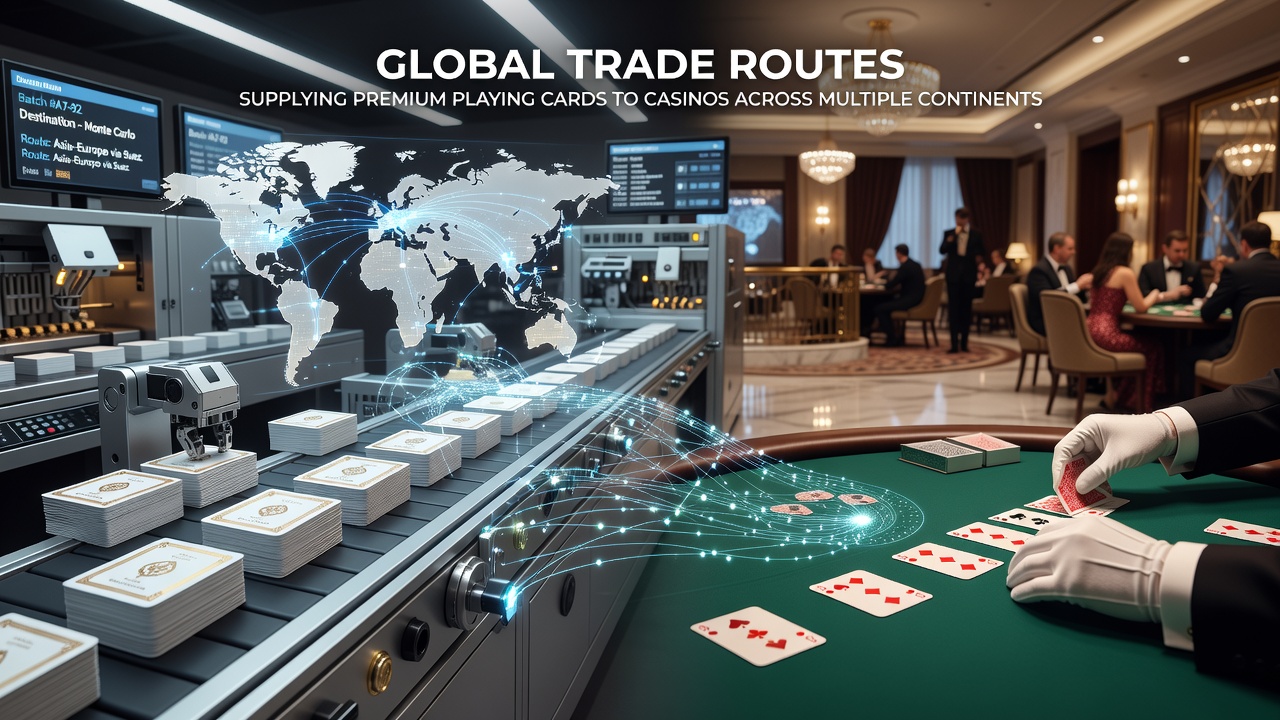
Premium playing cards reach casinos through established trade networks that connect specialized manufacturers in Asia, Europe, and North America with gaming venues spread across several continents. These routes rely on coordinated shipping schedules, customs protocols, and quality verification steps that keep supplies consistent for high-volume operations in places such as Las Vegas, Macau, and Sydney.
Primary Manufacturing Centers and Export Patterns
Factories in southern China produce the largest share of plastic-coated and linen-finished decks used in professional settings, with additional output coming from facilities in Germany and the United States. Export data compiled by the US Department of Commerce shows steady container volumes leaving ports near Shanghai and Ningbo each quarter, while European shipments often originate from Hamburg and Rotterdam. These manufacturing sites maintain separate production lines for casino-grade stock that meets specific weight, finish, and edge tolerances required by gaming regulators.
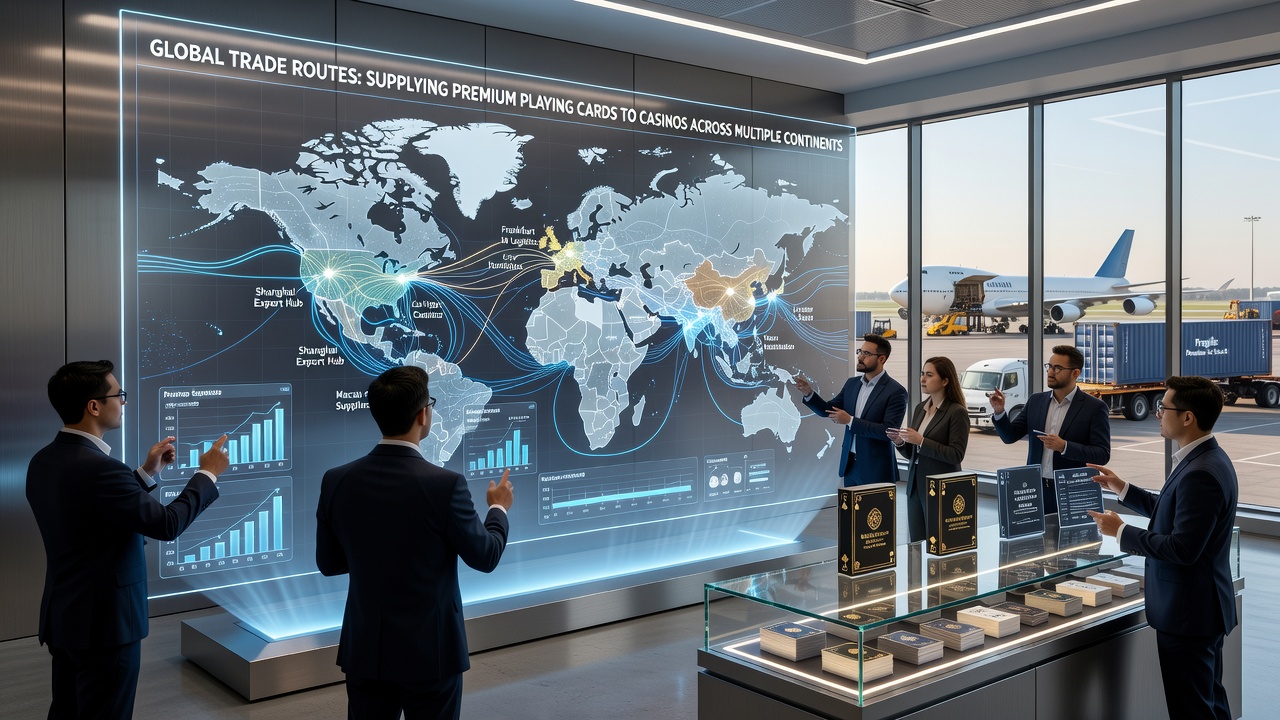
Finished decks move from these centers to regional distribution hubs before final delivery. Observers note that air freight handles urgent replenishment orders for new casino openings, whereas ocean containers carry the bulk volumes needed for ongoing table operations. Trade statistics indicate that the majority of premium decks traveling to North American destinations pass through the ports of Los Angeles and Long Beach, whereas shipments bound for Australian venues frequently route via Singapore.
Maritime and Air Corridors Serving Different Regions
Container vessels traveling the transpacific route deliver cards from East Asian producers directly to western North American ports in roughly 12 to 16 days. From there, rail and truck networks carry pallets onward to inland casinos in Nevada and Atlantic City. European casinos receive decks through Mediterranean and North Sea gateways, with many loads originating from the same Chinese factories yet cleared through EU customs facilities in Antwerp or Marseille. Data from Australian Bureau of Statistics trade records confirm regular arrivals at Melbourne and Brisbane that support venues across the continent.
Air cargo supplements these sea lanes when seasonal demand spikes or when replacement stock must arrive within 48 hours. Airlines operating dedicated freighter services between Guangzhou and Dubai, for instance, accommodate smaller consignments that then connect to onward flights serving African and Middle Eastern gaming markets. Industry reports show that such mixed-mode shipments have increased as casino expansions continue in locations previously served only by slower ocean routes.
Distribution Networks Within Key Casino Markets
Once cards clear customs, specialized logistics firms manage temperature-controlled storage and final-mile delivery to individual properties. In Macau, bonded warehouses near the port allow rapid transfer to integrated resorts without repeated border inspections. Similar facilities operate near major US hubs, enabling same-week distribution to properties along the Las Vegas Strip and in regional markets. Casinos in Canada and Mexico often receive consolidated loads that combine decks with other table-game consumables to reduce per-unit transport costs.
Those managing inventory at large properties coordinate with suppliers on staggered delivery schedules that align with monthly or quarterly table maintenance cycles. This approach minimizes on-site storage needs while ensuring that every deck meets the serial-number and tamper-evident packaging standards enforced by local gaming authorities. Trade flows to emerging markets in Southeast Asia and Latin America follow comparable patterns, though volumes remain smaller and rely more heavily on regional freight forwarders.
Regulatory and Documentation Requirements Along Trade Routes
Every shipment of premium playing cards must include certificates of origin, material safety data sheets, and proof of compliance with destination-country gaming standards. Shipments entering the European Union undergo checks aligned with directives from the European Commission, while Australian imports reference guidelines issued by state-level gaming authorities. Documentation accuracy directly affects clearance times at busy ports, where even minor discrepancies can delay release by several days.
Starting in June 2026, updated harmonized tariff codes for polymer-coated gaming products will take effect under the World Customs Organization framework. These changes will require exporters to provide additional technical specifications for decks containing certain plasticizers, affecting routing decisions for manufacturers supplying multiple continents. Logistics providers have already begun adjusting documentation templates to accommodate the new requirements without interrupting established delivery windows.
Conclusion
Global trade routes for premium playing cards continue to evolve as casino markets expand and regulatory frameworks shift. Established sea and air corridors link production centers in Asia and Europe with venues throughout North America, Australia, and beyond, supported by specialized warehousing and compliance processes. Figures from government trade agencies and industry monitoring groups show consistent volumes moving along these pathways, with adjustments underway to meet upcoming documentation standards in 2026. The networks remain essential for maintaining steady supplies of casino-grade decks across continents.