Sourcing Patterns for Dice and Playing Cards in Diverse Regulatory Environments Worldwide
Bianca Schmitz · Jul 20, 2026
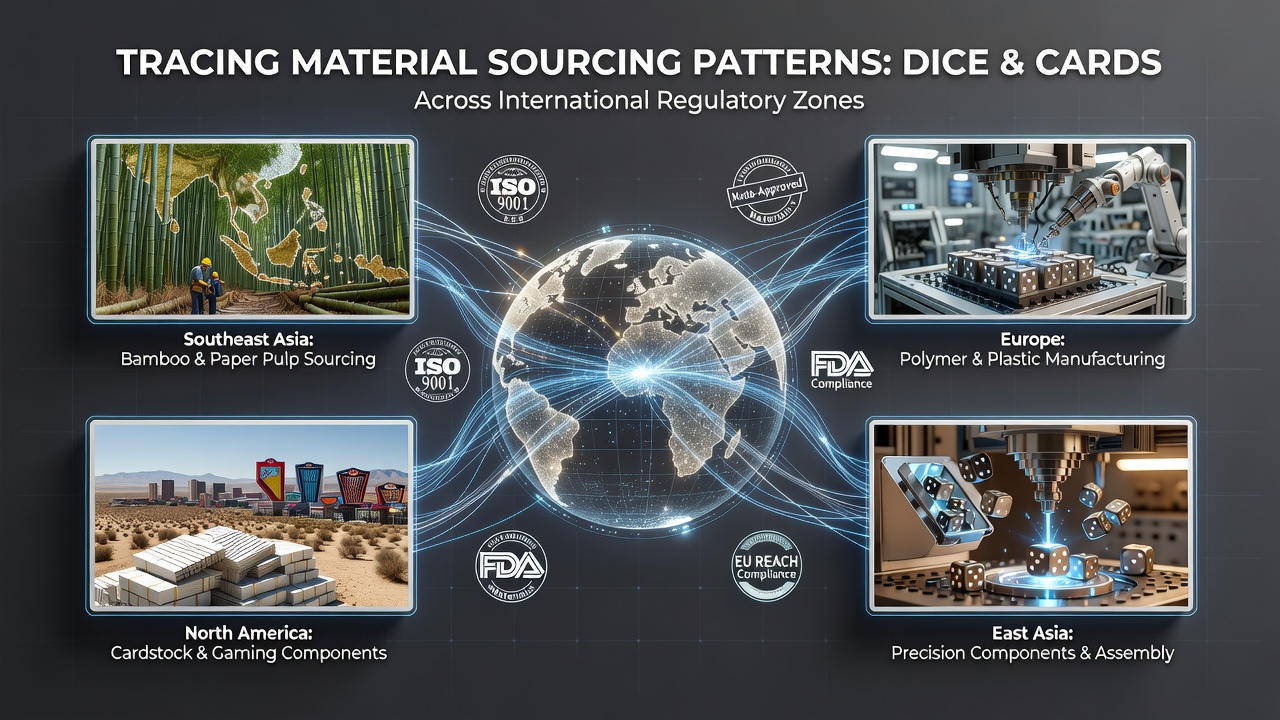
Sourcing Patterns for Dice and Playing Cards in Diverse Regulatory Environments Worldwide
Manufacturers source cellulose acetate and specialty papers for playing cards primarily from mills in Europe and North America while acrylic polymers for precision dice often originate in Asian production hubs that comply with varying purity standards. These patterns shift based on tariff structures and material safety mandates enforced across different jurisdictions and observers note that supply routes adapt when one region tightens restrictions on chemical additives used in edge treatments.
Core Materials and Their Typical Origins
High-grade dice rely on polymethyl methacrylate sourced through suppliers in Taiwan and South Korea where production facilities maintain tight controls on optical clarity and weight consistency. Playing cards draw from cotton-linter papers produced in mills located in Germany and Finland because those facilities meet strict limits on heavy metal content. Data from the US International Trade Commission reveals that imports of these polymers and papers flow mainly through ports in California and New Jersey before distribution to assembly plants in Nevada and Atlantic City.
Additional components such as UV-resistant coatings and magnetic inserts for security features come from specialized chemical firms in Japan and the Netherlands. Those firms adjust formulations to satisfy local environmental rules that differ from standards applied in emerging manufacturing centers. Traceability systems now require batch documentation that travels with each shipment so auditors can verify compliance at every transfer point.
Regulatory Differences Across Major Zones
North American regulators focus on material durability and fairness testing protocols that require documented proof of consistent density in dice and uniform thickness in card stock. European zones emphasize restrictions on certain plasticizers and solvents that affect both worker safety and end-product disposal. Asian regulatory frameworks often prioritize import licensing and local content rules that encourage partnerships with regional polymer producers.
Manufacturers maintain separate supply contracts for each zone because a single source rarely satisfies all overlapping requirements simultaneously. When one jurisdiction updates additive thresholds, sourcing teams reroute material orders to alternate suppliers that already hold the necessary certifications. This adjustment process occurs regularly as standards evolve and companies track changes through centralized compliance databases.

Tracking Technologies and Documentation Practices
Radio-frequency identification tags embedded in bulk shipments allow real-time monitoring from raw material extraction through final finishing stages. Digital ledgers record each transfer so that customs agents and gaming authorities can audit provenance without physical inspection of every container. Several large producers adopted blockchain-based platforms in 2024 that link supplier certificates directly to shipment records.
By July 2026, additional facilities in Southeast Asia integrated these platforms to streamline approvals for exports destined for North American and European markets. The systems reduce delays at border checkpoints because documentation travels ahead of the physical goods and inspectors access verified data through secure portals.
Supply Chain Adjustments and Regional Partnerships
Companies establish joint ventures with local mills when tariff changes make direct imports less viable. These partnerships secure steady supplies of approved materials while satisfying content rules that favor regional manufacturing. Observers note that such arrangements have expanded in recent years as regulatory zones refine their definitions of acceptable sourcing origins.
Alternative materials undergo testing when primary sources face shortages or new restrictions. For example, bio-based polymers from Canadian facilities have entered dice production lines after validation against existing fairness and durability benchmarks. Similar substitutions occur with recycled-content papers for card backs provided they meet optical and handling specifications required by casino operators.
Conclusion
Material sourcing for dice and playing cards follows distinct patterns shaped by overlapping regulatory requirements across international zones. Documentation systems and supplier partnerships enable manufacturers to maintain compliance while adapting to shifts in trade rules and material standards. These practices support consistent product quality for gaming venues worldwide.