Mastering the Mold: Craftsmanship Behind Custom Dice for Pro Casino Use
David Schmitt · Aug 8, 2026
Mastering the Mold: Craftsmanship Behind Custom Dice for Pro Casino Use
Custom dice production for professional venues relies on a sequence of specialized techniques that combine traditional machining with modern polymer processing, and these methods have evolved to meet the demands of high-volume gaming operations around the world. Manufacturers start with material selection, where cellulose acetate and acrylic blends undergo rigorous testing for density and clarity before any shaping begins, while suppliers in North America and Asia coordinate shipments to maintain consistent stock levels through the summer months.
Initial Forming and Precision Cutting
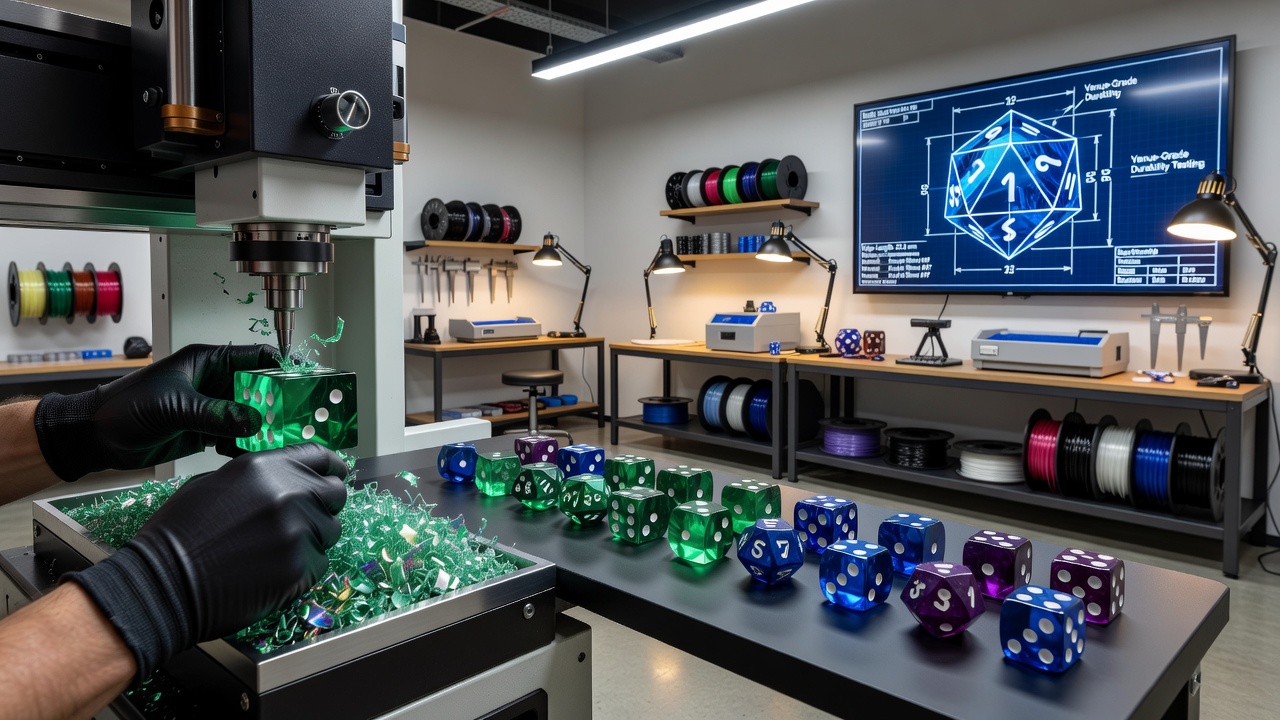
Once raw materials arrive, the forming stage begins with injection molding machines calibrated to tolerances measured in thousandths of an inch, and operators monitor temperature cycles that allow the plastic to flow evenly into steel dies without introducing air pockets or warping. After cooling, each blank moves to computer-controlled lathes that shave the six faces to identical dimensions, a step that ensures the finished product meets the geometric standards required by venues operating under oversight from bodies such as the Nevada Gaming Control Board.
Workers then drill or mill the pips, and the depth of each indentation is controlled by automated sensors that record every cut for later quality verification, while hand finishing removes any residual burrs that could affect roll behavior. This combination of automated precision and manual inspection continues through multiple shifts, particularly as production ramps up ahead of seasonal expansions at major properties.
Weighting, Balancing, and Edge Treatments
Balancing follows the cutting process, and technicians insert microscopic weights or adjust material removal on opposing faces to achieve uniform mass distribution across all axes, a requirement documented in technical guidelines issued by the Gaming Policy and Enforcement Branch in British Columbia. The dice then receive rounded corners and edges through a tumbling process that uses progressively finer abrasives, creating the smooth transitions that reduce chipping during repeated use on felt surfaces.
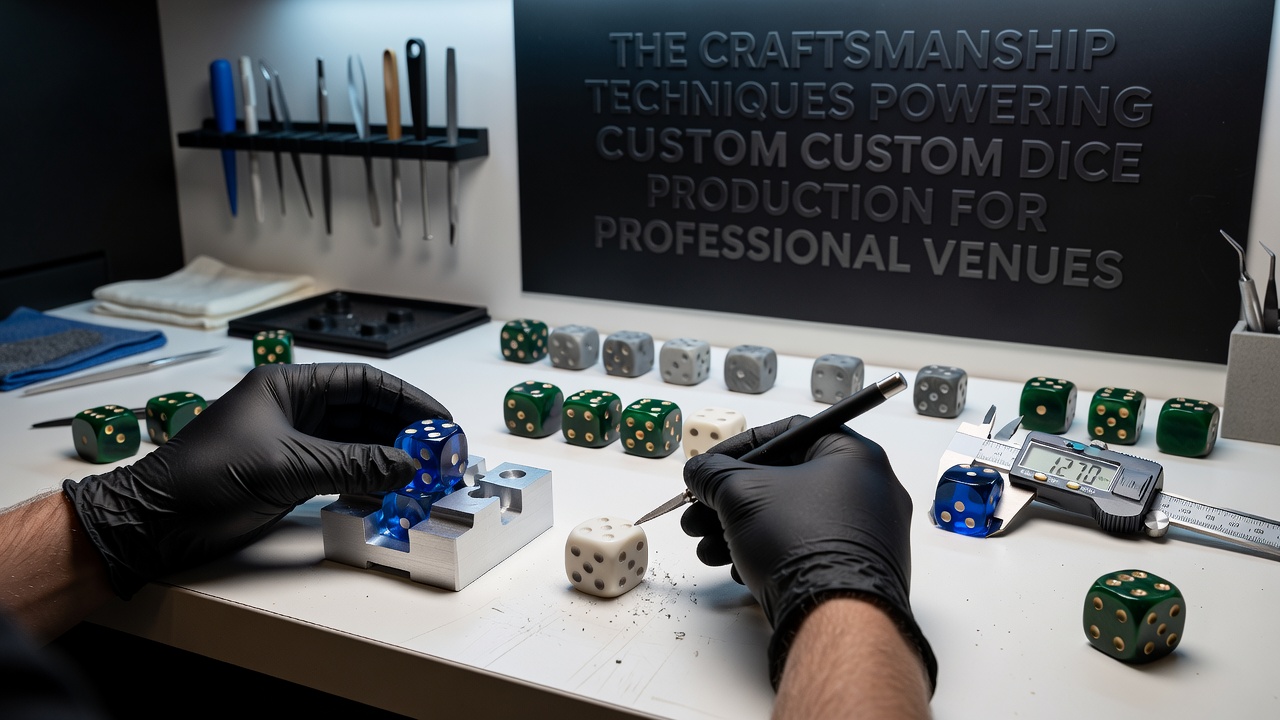
Custom orders often include laser-etched logos or serial markings at this stage, and the equipment operates at speeds that allow one operator to process several hundred pieces per hour without compromising legibility. Research from the University of Nevada, Reno gaming technology program has tracked how these surface treatments influence longevity, showing measurable reductions in wear rates when specific polishing compounds are applied.
Coating Application and Final Verification
Protective coatings come next, and manufacturers apply thin layers of clear polymer that seal the pips and outer surfaces against oils and moisture, with curing ovens maintaining exact humidity levels to prevent clouding. Each batch then undergoes random sampling where dice are rolled thousands of times on calibrated tables, and data loggers capture outcomes to confirm compliance with venue specifications before packaging.
Facilities handling large contracts for properties in Australia and Europe coordinate with local testing labs that follow standards set by the Australian Communications and Media Authority, ensuring that every shipment arriving in August 2026 will satisfy both regulatory and operational checklists. Traceability systems record the origin of each material lot and the machine settings used during production, allowing venues to audit individual dice back to their manufacturing date.
Conclusion
These layered processes continue to support the supply chain for professional gaming venues, and ongoing refinements in tooling and material science keep pace with the scale of modern casino floors. The techniques described here represent established industrial practice rather than experimental methods, and they remain central to maintaining consistent product performance across jurisdictions.