Engineering Resilience: Polymer Advances for Poker Tables in Arid Casino Settings
David Schmitt · Jun 27, 2026
Engineering Resilience: Polymer Advances for Poker Tables in Arid Casino Settings
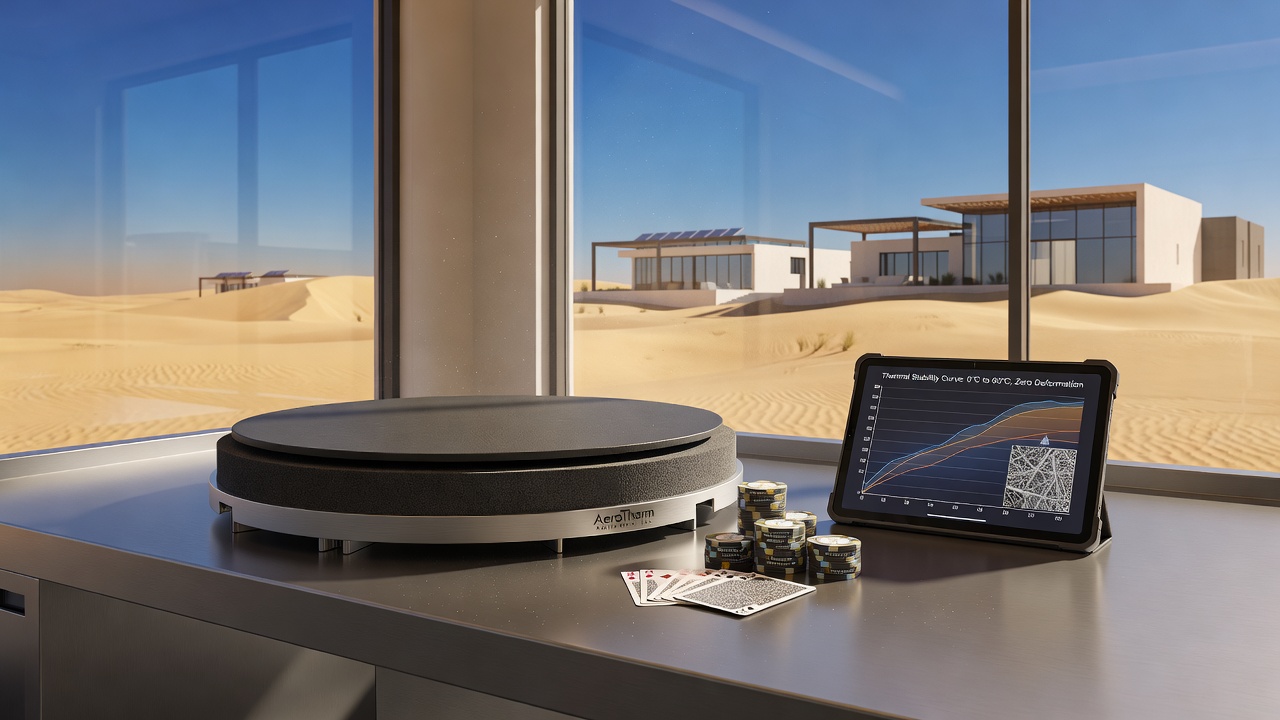
Desert resort venues face extreme temperature swings, intense ultraviolet exposure, and low humidity levels that challenge standard gaming equipment, yet material science has produced targeted solutions for poker table components that maintain performance under these conditions. Researchers at institutions across multiple regions have documented how specialized polymers, coatings, and composites resist warping, fading, and surface degradation while preserving the tactile qualities players expect during extended sessions.
High daytime temperatures often exceed 40 degrees Celsius in locations such as those in the southwestern United States and parts of Australia, while nighttime drops create thermal cycling stress on table frames and surfaces. Data from the National Institute of Standards and Technology indicates that conventional wood-based substrates expand and contract at rates that lead to seam separation within 18 months under such cycles, prompting manufacturers to shift toward hybrid cores combining aluminum honeycomb with cross-linked polyethylene layers.
Core Structural Materials and Thermal Stability
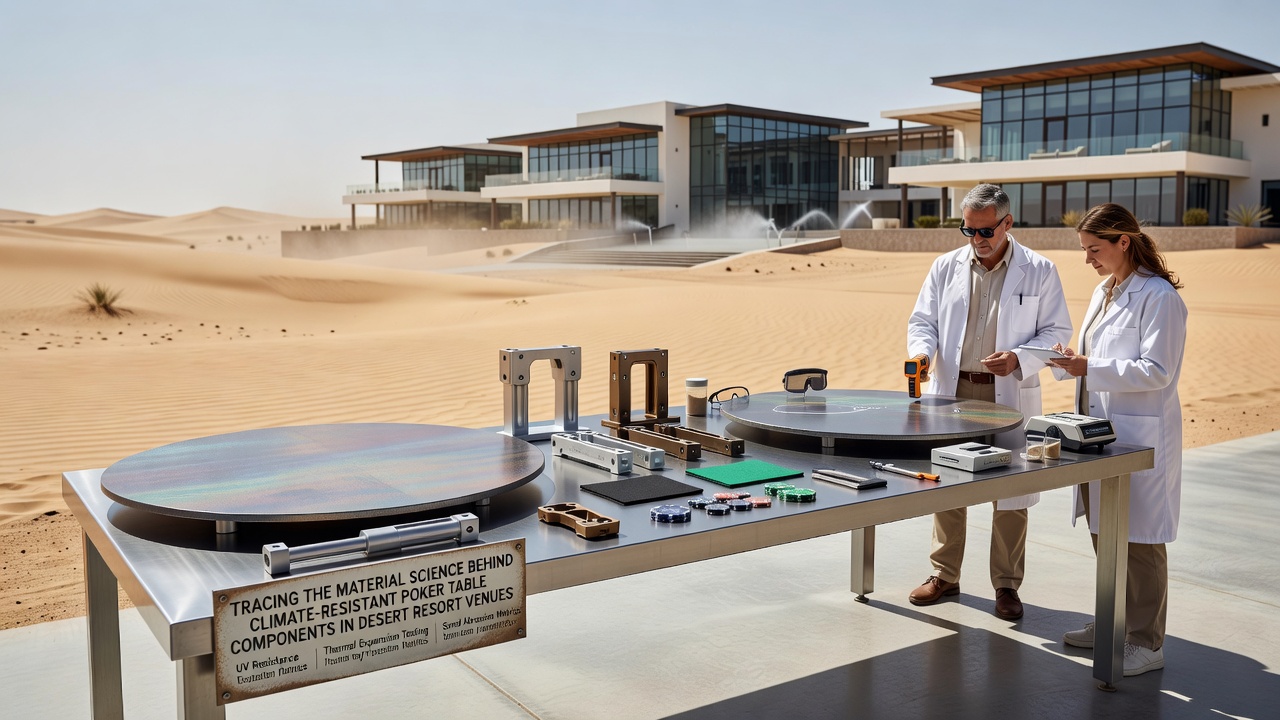
Frame assemblies now incorporate anodized aluminum alloys treated with ceramic-infused primers that reflect solar radiation and reduce heat absorption by up to 35 percent compared with untreated metals. These alloys demonstrate consistent dimensional stability across a 60-degree Celsius range, according to testing protocols developed by the Commonwealth Scientific and Industrial Research Organisation in Australia. Edge rails receive additional protection through silicone-based elastomers that accommodate micro-movements without cracking or allowing dust ingress, a common issue in arid environments where fine particles accumulate rapidly.
Table tops rely on multi-layer constructions where the base substrate bonds to a middle stratum of expanded polypropylene foam engineered for low thermal conductivity. This foam layer acts as an insulator, slowing heat transfer to the playing surface and minimizing localized softening during peak afternoon hours. Surface felts incorporate acrylic fibers blended with ultraviolet stabilizers that maintain colorfastness after 2,000 hours of accelerated weathering exposure, figures that align with reports from European polymer research consortia.
Surface Coatings and UV Resistance
Protective topcoats represent another area of focused development, where nano-ceramic particles dispersed within polyurethane matrices create barriers against ultraviolet degradation. These coatings reduce gloss loss and prevent the chalky residue that forms when standard varnishes break down under prolonged sun exposure through large resort windows. Application thickness typically ranges between 80 and 120 microns, a specification verified through cross-sectional analysis at manufacturing facilities supplying major desert properties.
What's interesting is how these same coatings simultaneously improve cleanability, allowing staff to remove sunscreen residues and beverage spills without abrading the underlying felt. In June 2026 several properties in Nevada completed scheduled resurfacing cycles using the latest generation of these coatings, coinciding with updated durability benchmarks released by regional gaming authorities.
Moisture Management and Low-Humidity Performance
Although desert air contains little moisture, rapid cooling at night can produce condensation on metal components when interior climate control systems operate at high settings. Manufacturers address this through vapor-permeable barriers integrated beneath the playing surface that allow any accumulated moisture to escape while blocking external humidity spikes during monsoon seasons. These barriers consist of microporous polytetrafluoroethylene membranes originally adapted from architectural applications in the Middle East.
Fasteners and hardware receive similar attention, with stainless steel grades selected for their resistance to chloride-induced pitting that can occur when alkaline dust combines with occasional moisture. Thread-locking compounds formulated for high-temperature stability prevent loosening during repeated thermal expansion cycles, a detail confirmed through field inspections at operating venues.
Real-World Implementation and Ongoing Monitoring
Resort operators track component performance through embedded sensors that record temperature, humidity, and surface integrity at regular intervals. One facility in Arizona reported that tables fitted with the newest polymer blends required felt replacement 40 percent less frequently than older models over a three-year period. Such outcomes have encouraged additional venues to adopt similar specifications during upcoming renovations scheduled through late 2026.
Supply chains for these specialized materials span several continents, drawing raw polymers from North American petrochemical facilities and precision coatings from Asian manufacturers certified under international quality standards. Quality assurance protocols include batch testing for thermal shock resistance and accelerated aging simulations that replicate five years of desert exposure within weeks.
Conclusion
Material science continues to refine the components that allow poker tables in desert resort venues to withstand harsh environmental demands while delivering consistent playing conditions. Ongoing collaboration between polymer chemists, equipment fabricators, and venue operators ensures these innovations keep pace with both climate realities and regulatory expectations across jurisdictions. The result remains a playing surface engineered for longevity rather than frequent replacement, supported by measurable data from testing organizations worldwide.