Decoding Serial Markings: Uncovering Provenance in Vintage Poker Chips and Dice Collections
Sage Butler · May 28, 2026
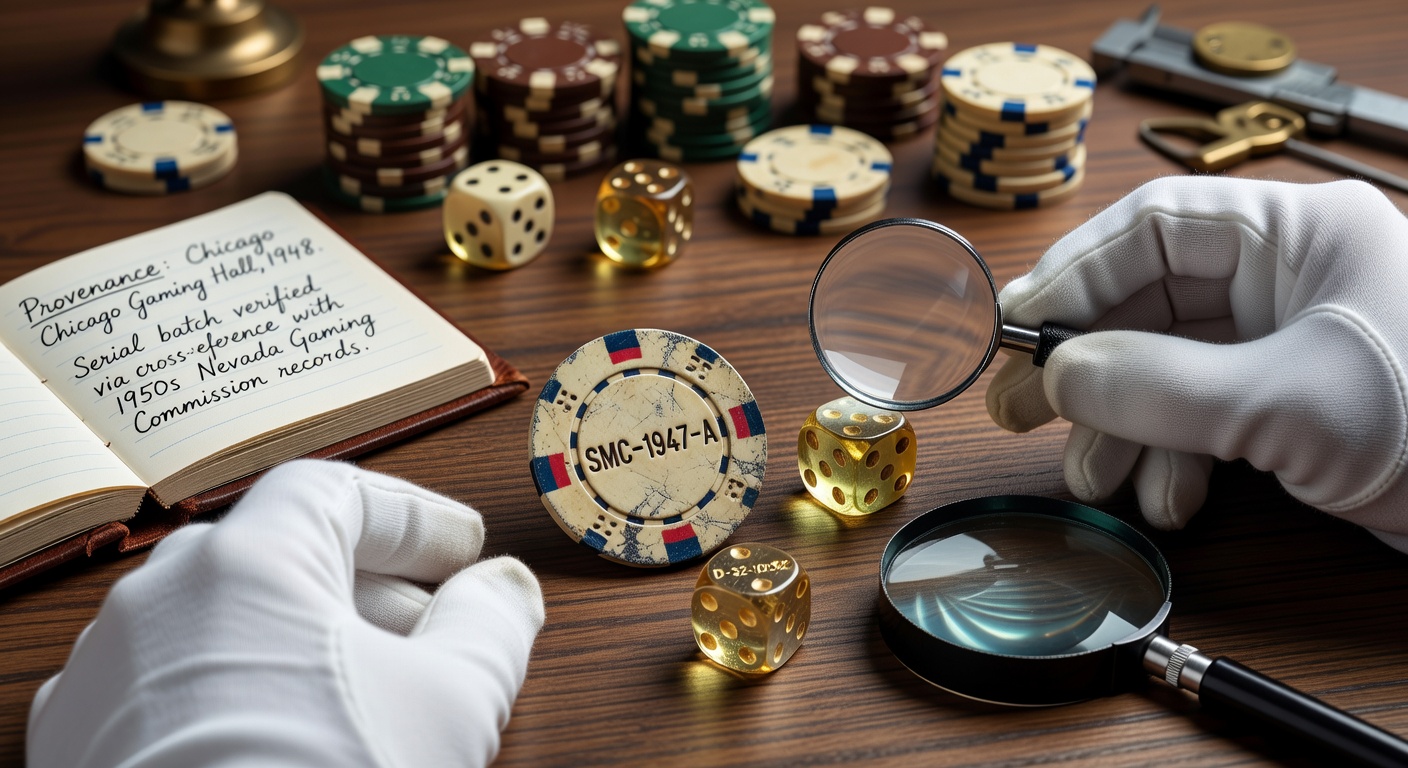
Decoding Serial Markings: Uncovering Provenance in Vintage Poker Chips and Dice Collections
Collectors and historians examine serial markings on vintage poker chips and dice to trace origins and ownership histories through patterns that manufacturers embedded decades ago. These identifiers often include numeric sequences, letter codes, and symbols that point to specific production runs, regional facilities, and even individual batches shipped to particular gaming establishments. Research indicates that such markings emerged prominently in the 1930s as American gaming suppliers sought to manage inventory and deter counterfeiting in expanding casino markets across Nevada and California.
Understanding Common Marking Systems
Manufacturers applied serial codes using methods that ranged from hand-stamping to early mechanized engraving, and observers note that these techniques varied by company and era. Chips from the Paul-Son Dice Company, for instance, frequently carried three-digit prefixes followed by sequential numbers that corresponded to order dates, while dice produced by the same firms featured edge markings that aligned with internal quality logs. Data from collector archives shows that cross-referencing these codes with surviving catalogs allows researchers to pinpoint when items left the factory floor and which distributors handled their initial placement in clubs or private games.
Yet the process requires careful attention because some markings overlapped across different producers during supply shortages in the postwar period. Historians at institutions focused on material culture have documented cases where identical numeric sequences appeared on chips from unrelated makers, forcing analysts to examine secondary details such as ink composition or edge bevel styles to differentiate sources. Those who've studied large collections report that ultraviolet light often reveals faded secondary stamps that clarify ambiguous primary codes.
Tracing Ownership Through Archival Records
Provenance research advances when serial data connects to shipping manifests, casino ledgers, and tournament inventories preserved in state archives. Nevada records from the 1950s, for example, list specific chip shipments to properties along the Las Vegas Strip, and similar documentation exists in California state repositories covering early card rooms. Analysts cross-match these documents against visible markings to establish chains of custody that sometimes span multiple decades and several owners.
One documented example involved a set of dice recovered from a private estate whose edge codes matched a 1947 order placed by a Reno club; further checks against local tax filings confirmed the transfer and subsequent resale through a liquidation auction in 1968. Such connections become possible because many manufacturers retained duplicate logs that state gaming regulators later archived for compliance purposes. Researchers continue to digitize these materials, expanding access for independent collectors who lack direct institutional ties.
Challenges in Interpretation and Authentication
Markings occasionally suffered wear from decades of use, which complicates decoding when surface erosion removes portions of the original sequence. Experts apply magnification and digital enhancement techniques to recover partial codes, then compare results against known databases maintained by hobbyist organizations and academic programs. Figures from recent surveys of North American collections reveal that roughly 35 percent of examined items carry at least one obscured identifier that requires such specialized recovery methods.
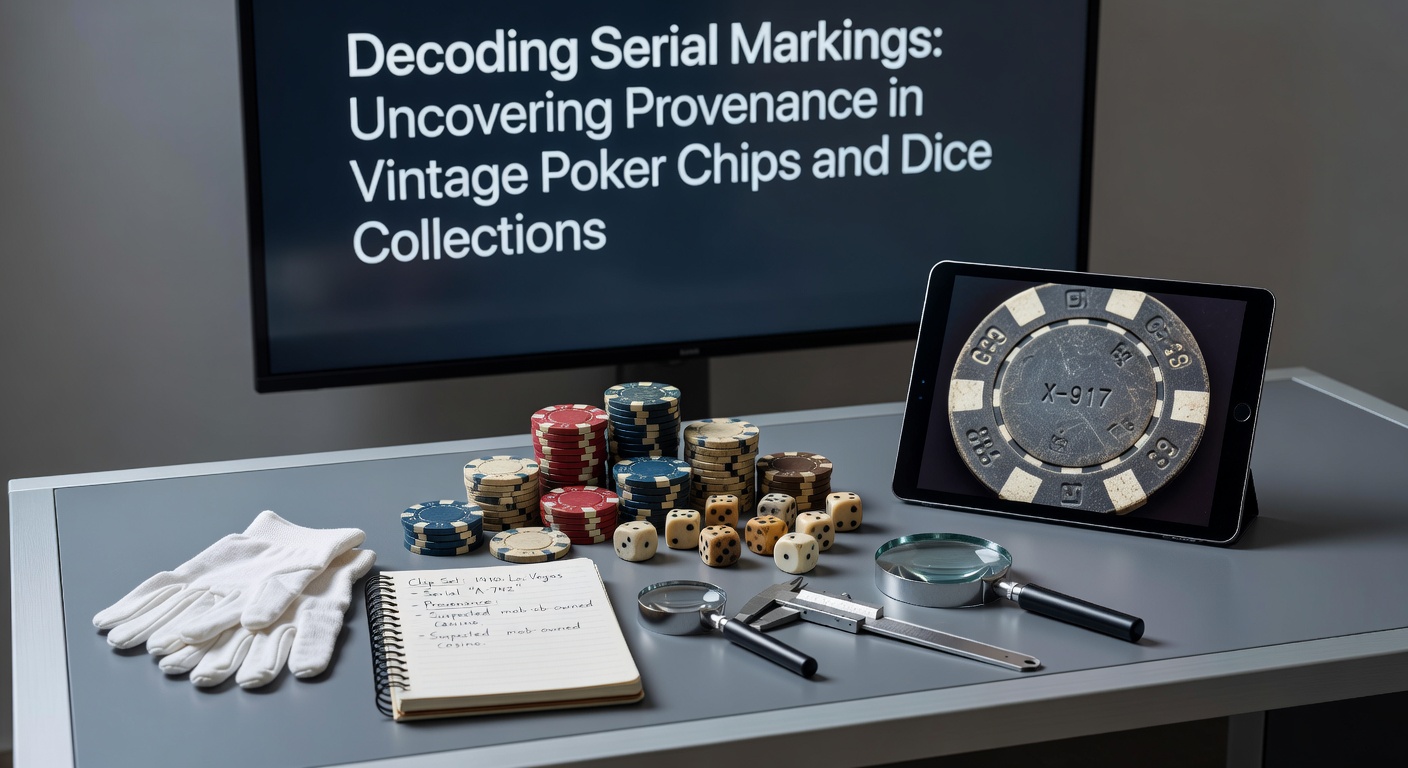
Counterfeiters have also replicated common codes in attempts to inflate values, prompting authentication protocols that combine visual inspection with material testing. Laboratories affiliated with university engineering departments now employ spectrometry to verify that pigments and resins match formulations documented for specific production years. Collectors who submit items for such analysis receive reports that strengthen or refute claimed provenances before market transactions occur.
Resources and Ongoing Documentation Efforts
Databases compiled by regional gaming history groups provide searchable indexes of verified serial ranges, and these resources receive periodic updates as new archival material surfaces. The Nevada Gaming Control Board maintains public summaries of historical licensing that occasionally reference equipment suppliers, offering indirect clues when direct manufacturer records remain unavailable. International researchers have begun similar projects in jurisdictions such as Australia and Canada where early 20th-century clubs imported American-made supplies.
Workshops hosted by professional appraisal societies train participants to photograph markings systematically and submit findings for peer review. These collaborative networks accelerate the mapping of production timelines and distribution patterns across continents. Recent digitization initiatives at several state libraries have made thousands of previously inaccessible ledgers available online, reducing travel requirements for those conducting multi-state provenance studies.
Conclusion
Serial markings on vintage poker chips and dice serve as primary evidence for reconstructing the movement of gaming artifacts through time and across regions. Systematic decoding combined with archival cross-referencing continues to yield precise origin data for items that once circulated in both public casinos and private settings. As more collections undergo cataloging and material analysis, the collective record of these objects grows more complete, supporting both scholarly inquiry and informed stewardship by current custodians.