Advanced Polymer Blends Reshaping Durability Standards for Professional Blackjack Table Felts
Frankie Schmid · May 23, 2026
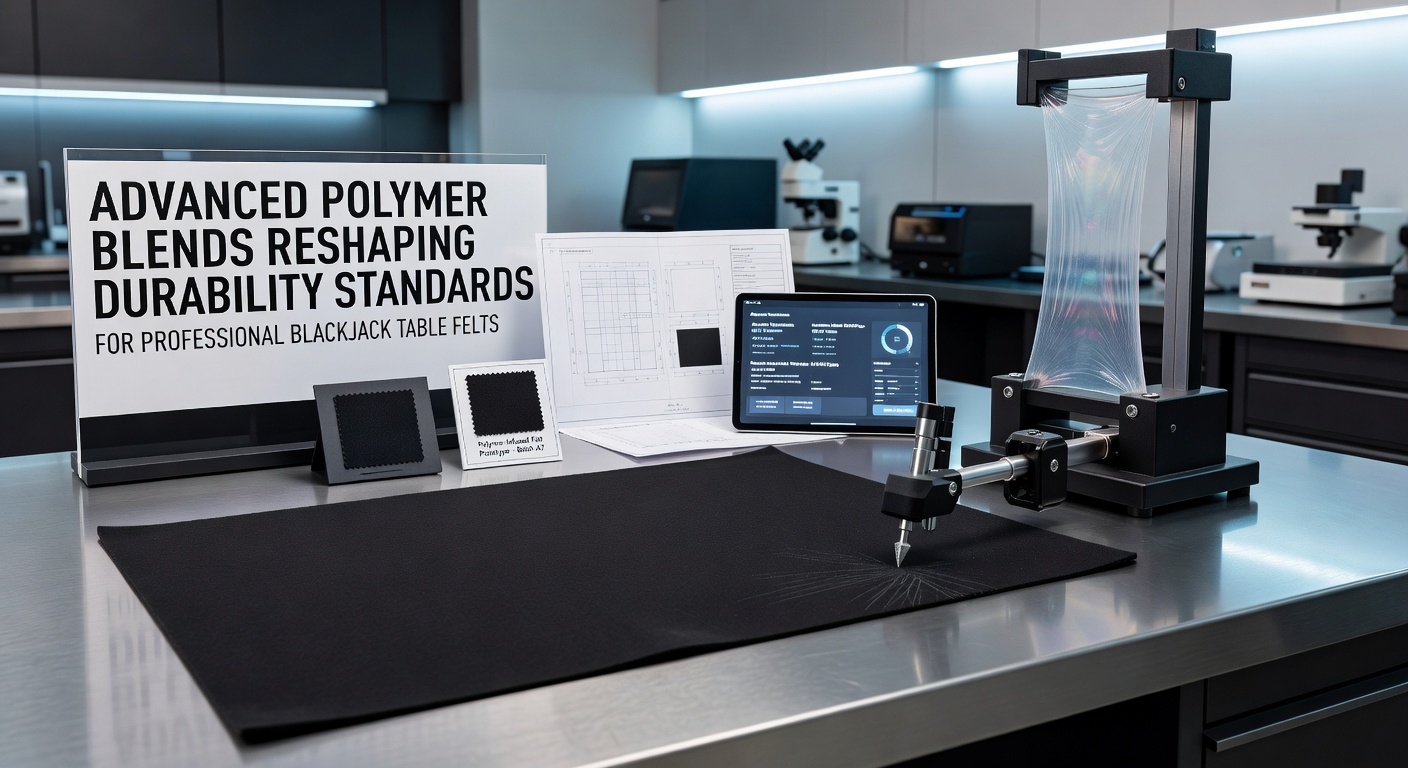
Advanced Polymer Blends Reshaping Durability Standards for Professional Blackjack Table Felts
Professional blackjack tables require felts that withstand thousands of card shuffles, chip placements, and player interactions each day, and advanced polymer blends now deliver performance metrics that surpass traditional wool and synthetic fabrics in multiple durability categories. These materials combine polyurethane matrices with acrylic copolymers and silicone additives to create surfaces that resist abrasion while maintaining the precise friction levels dealers and players expect during extended play sessions.
Manufacturing processes for these felts involve extrusion techniques that embed polymer particles directly into the fabric weave, which produces a uniform coating that prevents fraying at edges where cards repeatedly contact the surface. Industry testing protocols measure cycles of simulated use until visible degradation appears, and data from equipment suppliers indicate that polymer-enhanced felts extend service life by factors of two to three compared with earlier generations of table coverings.
Material Composition and Performance Characteristics
Polymer blends typically incorporate thermoplastic polyurethane as the primary binder because it bonds effectively with polyester substrates used in casino-grade felts, while secondary components such as fluoropolymer additives reduce surface tension and limit liquid absorption from spilled drinks or hand oils. Researchers at materials laboratories have documented that these formulations maintain consistent colorfastness under ultraviolet exposure from overhead casino lighting, a factor that preserves table aesthetics across multi-year installation periods.
Mechanical properties receive equal attention during development, with tensile strength and elongation percentages calibrated to allow slight give under chip weight without permanent deformation. One study published in a European polymer journal tracked felt samples subjected to 500,000 abrasion cycles and recorded minimal fiber loss when advanced blends were present, whereas control samples using standard acrylic treatments showed measurable thinning after half that number of cycles.
Integration with Casino Operations and Equipment Standards
Casinos integrate these felts into tables equipped with RFID readers and automated shuffling machines, where the smoother polymer surfaces reduce drag on card movement and extend the operational intervals between felt replacements. Maintenance crews report that cleaning protocols shift toward milder detergents because the polymer layer repels stains more effectively, which lowers labor costs and chemical usage across large gaming floors.

Equipment certification bodies in multiple jurisdictions now reference updated durability thresholds that reflect the capabilities of these new materials, and suppliers must demonstrate compliance through standardized wear tests before tables receive approval for tournament or high-limit play areas. Observers note that venues planning expansions, including projects with targeted opening phases in May 2026, incorporate these specifications into procurement documents to align with long-term operational budgets.
Testing Protocols and Regulatory Alignment
Testing laboratories subject felt samples to controlled environments that replicate temperature fluctuations and humidity levels common in gaming venues, measuring parameters such as coefficient of friction and compression recovery after repeated loading. Figures from regulatory reports issued by the Nevada Gaming Control Board and the Alcohol and Gaming Commission of Ontario reveal that felt replacements occur less frequently when polymer blends meet or exceed current abrasion resistance benchmarks.
Academic collaborations with textile engineering departments have produced predictive models that correlate polymer molecular weight distributions with expected service intervals, allowing manufacturers to optimize formulations before full-scale production. These models draw on data sets collected from operational tables in both North American and Asian markets, providing broader validation than single-region studies alone.
Supply Chain and Manufacturing Developments
Production of polymer-treated felts relies on specialized coating lines that apply multiple thin layers rather than single heavy applications, which prevents cracking during table folding and transport to installation sites. Suppliers coordinate with chemical producers to source consistent batches of copolymers, ensuring that performance characteristics remain uniform across large orders destined for casino chains operating multiple properties.
Trade associations representing gaming equipment manufacturers have begun publishing voluntary guidelines that recommend minimum polymer content percentages for felts used in professional settings, although mandatory standards continue to vary by jurisdiction. Procurement teams at major venues cross-reference these guidelines with internal usage logs to forecast replacement cycles more accurately and adjust inventory accordingly.
Conclusion
Advanced polymer blends continue to influence the specifications that define acceptable performance for professional blackjack table felts, with measurable improvements in abrasion resistance, stain repellency, and color retention documented across multiple testing programs. As manufacturing techniques refine further and regulatory bodies incorporate updated metrics into approval processes, facilities gain extended intervals between replacements while maintaining the playing characteristics essential to the game. These developments reflect ongoing coordination between materials science, equipment standards, and operational requirements across the gaming sector.